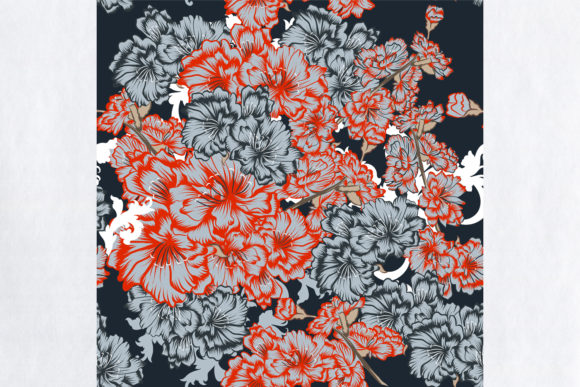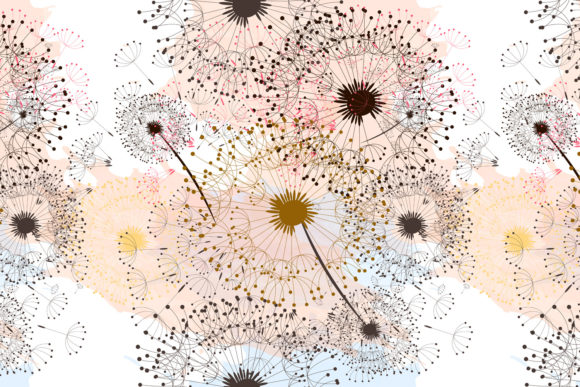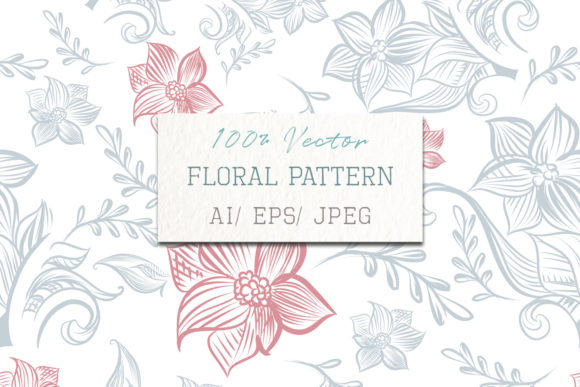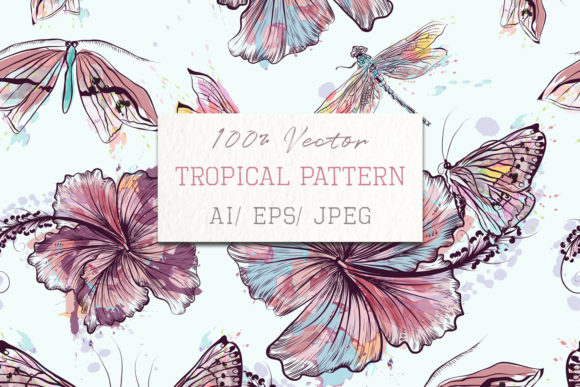
Evaluating the Floral Rose Pattern in Victorian Style Vector Asset
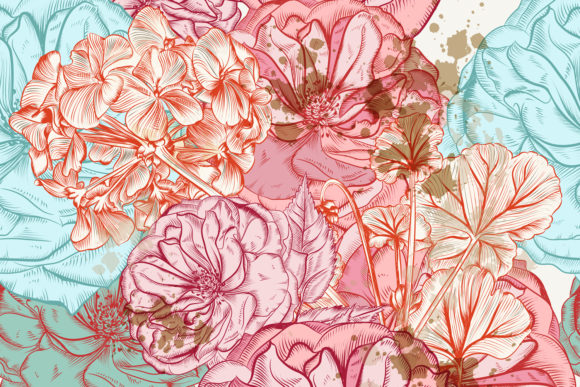
The resurgence of vintage aesthetics in modern digital design has created a sustained demand for authentic, high-quality historical motifs. Among these, the Floral Rose Pattern in Victorian Style occupies a specific niche that bridges traditional botanical illustration with contemporary production needs. For designers, publishers, and brand strategists, sourcing assets that capture the intricate density of 19th-century ornamentation without sacrificing technical flexibility is a persistent challenge. This particular vector art collection, featuring 100 distinct floral elements, addresses that gap by providing scalable source files alongside high-resolution raster previews. Understanding the practical utility of this asset requires looking beyond its aesthetic appeal to evaluate its integration into professional workflows, its technical specifications, and its long-term value across various media applications.
Technical Specifications and Workflow Integration
The primary advantage of acquiring a Floral Rose Pattern in Victorian Style in vector format lies in resolution independence. Unlike raster images that degrade when resized, vector paths maintain crisp edges at any scale, from business card icons to large-format wall coverings. This specific package includes an AiCS2 file and an EPS10 file. The choice of EPS10 is significant for professional environments; it ensures backward compatibility with older versions of Adobe Illustrator and alternative vector software like CorelDRAW or Affinity Designer. This universality reduces friction in collaborative agencies where team members may use different software generations.
The inclusion of a 5000x5000 px JPEG preview serves a distinct functional purpose beyond mere visualization. In high-volume production environments, loading complex vector files with hundreds of anchor points can tax system resources. The high-res JPEG allows designers to mock up concepts, present options to clients, and plan layouts without opening the heavy source file until final production begins. However, users must note that mockups are not included. This distinction is vital for budgeting and timeline planning; you are purchasing raw ingredients, not a pre-plated dish. You will need your own presentation templates or device frames to showcase the pattern effectively in portfolios or client pitches.
Vector Integrity and Hand-Drawn Characteristics
A common pitfall with digitized vintage art is the loss of organic texture during the tracing process. Many automated vectorization tools produce sterile, geometric shapes that lack the nuance of hand-drawn line work. This Floral Rose Pattern in Victorian Style appears designed to preserve those irregularities. The "hand-drawn characteristics" mentioned in the product description suggest that the bezier curves were likely refined manually rather than auto-traced. For the end-user, this means the roses retain the varying line weights and natural imperfections that define the Victorian aesthetic. When scaling up for print, these nuances prevent the artwork from looking like generic clip art, maintaining a level of craftsmanship that discerning audiences appreciate.
Aesthetic Versatility and Design Application
Victorian floral design is characterized by abundance, symmetry, and symbolic depth. A collection containing 100 individual vector flowers offers substantial modular flexibility. Rather than being locked into a single, static repeating tile, designers can deconstruct and reassemble elements to create custom compositions. This modularity is essential for adapting the Floral Rose Pattern in Victorian Style to non-standard aspect ratios, such as social media stories, website headers, or product packaging sleeves.
- Editorial and Publishing: The intricate nature of these roses makes them ideal for book covers, chapter dividers, and certificate borders. The vector format allows for easy color separation, enabling designers to match the florals to specific spot colors or foil stamping requirements.
- Brand Identity and Packaging: Heritage brands, tea companies, cosmetic lines, and wedding stationers often require this specific visual language. Having 100 unique elements prevents visual fatigue across a product line, allowing each SKU to feature a distinct arrangement while maintaining brand cohesion.
- Textile and Surface Design: Because vectors scale infinitely, this asset is suitable for both small-scale embroidery digitizing and large-scale wallpaper printing. The ability to adjust stroke width and fill colors directly in the vector file streamlines the creation of colorways for fabric collections.
The density of the Victorian style also provides excellent negative space management. In web design, these patterns can be used as low-opacity backgrounds that add texture without compromising text readability. The complexity of the rose pattern draws the eye but, when treated correctly, recedes enough to support foreground content. This dual functionality—as both a hero element and a textural backdrop—maximizes the return on investment for the asset.
Color Customization and Print Readiness
One of the most practical aspects of owning the vector source files for a Floral Rose Pattern in Victorian Style is total color control. Historical accuracy often dictates muted tones, sepia, or monochromatic schemes, but modern applications frequently require vibrant or brand-specific palettes. With editable vectors, recoloring is instantaneous. Designers can isolate specific petals, leaves, or stems to apply gradients or duotones, transforming a traditional illustration into something contemporary. For print professionals, this also means the ability to convert RGB screen colors to CMYK or Pantone values accurately, avoiding the muddy results that sometimes occur when converting flattened raster images.
Assessing Value and User Suitability
Determining whether this asset fits your needs depends largely on your role and project scope. For serious hobbyists and freelancers, the 100-element count provides a comprehensive library that could serve as a foundational resource for years. Instead of purchasing individual illustrations for each new project, this bundle consolidates costs. For educators and content creators focusing on history, botany, or design theory, having accurate, scalable visuals supports high-quality instructional materials without licensing complications associated with stock photo subscriptions.
However, there are realistic limitations to consider. Victorian patterns are inherently complex. Users with limited experience in vector editing may find the sheer number of anchor points overwhelming. Modifying individual flower shapes requires patience and proficiency with the pen tool and pathfinder functions. Additionally, because the creator notes that "creating this illustration was a work of joy," the asset carries an artisanal quality that demands respectful usage. It is best suited for projects where detail matters; using such intricate work at tiny sizes where details blur would be a misuse of the asset's strengths.
Long-Term Utility and File Management
Digital assets depreciate if they cannot adapt to changing trends. The classic nature of the Floral Rose Pattern in Victorian Style insulates it from rapid trend cycles. Unlike trendy minimalist or brutalist graphics that may feel dated within two years, Victorian botanicals have remained relevant for over a century. Investing in a high-quality vector version is essentially future-proofing your design toolkit. To maximize this longevity, proper file management is recommended. Upon download, organize the AiCS2 and EPS10 files with clear metadata tags. Create swatch libraries or symbol sets within your design software to make the 100 flowers easily accessible without navigating through external folders repeatedly. This small upfront effort significantly speeds up future workflow.
Support and Creator Reliability
In the digital marketplace, the relationship with the asset creator is often overlooked but critically important. The product description explicitly invites users to "drop a line" for assistance. This openness signals confidence in the product and a commitment to user success. For professionals working under tight deadlines, knowing that technical support is available can mitigate risk. If a file behaves unexpectedly or if there is a question about licensing for a specific commercial application, direct access to the creator adds a layer of reliability that anonymous stock platforms cannot match. This human element transforms a simple file download into a professional resource exchange.
Ultimately, the Floral Rose Pattern in Victorian Style represents a intersection of artistic heritage and technical precision. It is not merely a decorative overlay but a functional design system capable of supporting diverse creative objectives. Whether you are producing luxury packaging, designing educational materials, or building a heritage-inspired brand identity, the combination of infinite scalability, extensive element variety, and editable vector architecture makes this a pragmatic addition to a professional creative arsenal. By understanding both its capabilities and its requirements, users can leverage this asset to produce work that honors the past while meeting the rigorous standards of modern production.